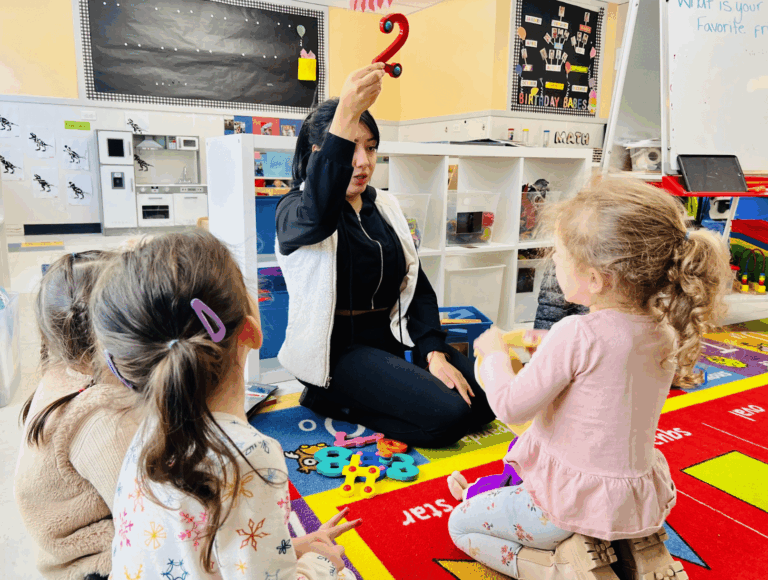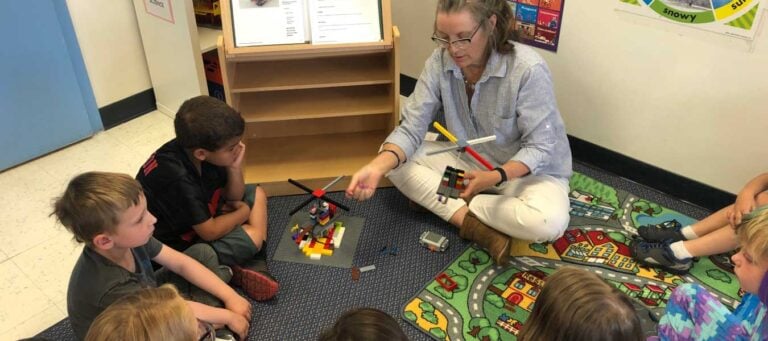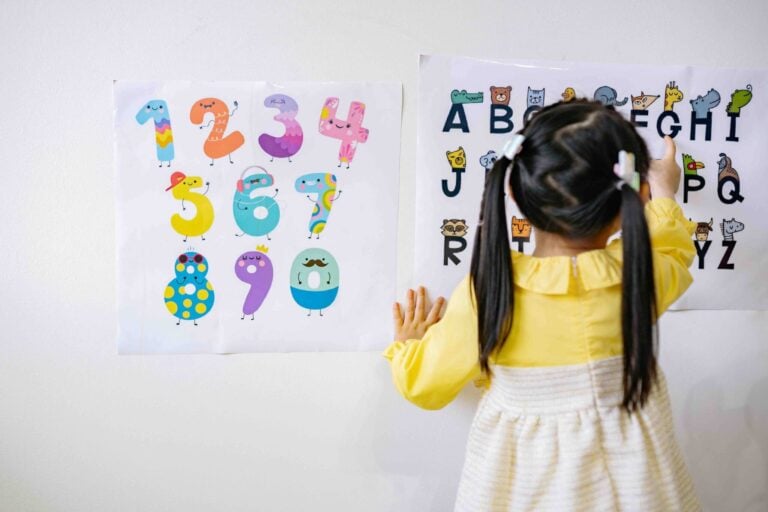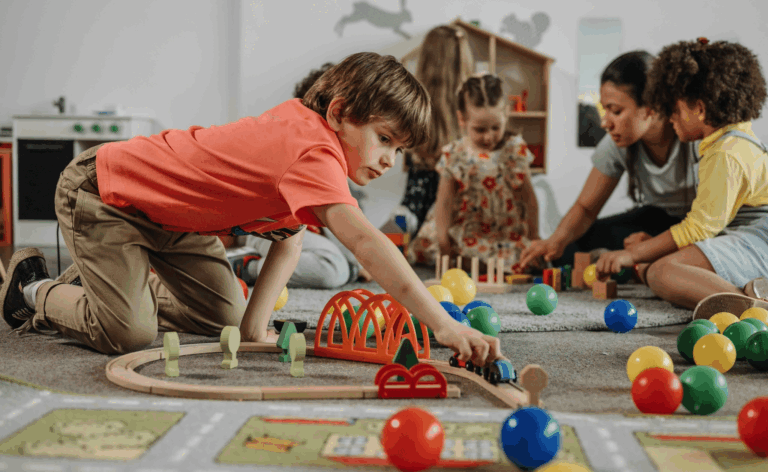
Hands on learning for toddlers is about so much more than keeping little hands busy—it’s one of the best ways to build confidence, creativity, and lifelong problem-solving skills. Every time your child stacks blocks, pours water between cups, solves a simple puzzle, or experiments with colors, they’re strengthening important brain connections. At STEM Child Care, we believe hands on learning for toddlers creates meaningful opportunities for children to explore, ask questions, make discoveries, and learn through play.
Let’s be honest—life with toddlers is full of challenges. One minute they’re trying to figure out how to share a favorite toy, and the next they’re wondering why peanut butter somehow ended up in their hair. While these everyday moments may seem small, they’re actually opportunities for learning. Through hands-on STEM experiences, toddlers begin developing the critical thinking and problem-solving skills they’ll use throughout their lives.

Why Hands On Learning for Toddlers Matters
The toddler years are an incredible time for brain development. During this stage, children learn best by touching, experimenting, moving, and exploring rather than simply watching or listening.
Hands on learning for toddlers encourages children to investigate how the world works through experiences that are both engaging and meaningful.
Whether they’re building with blocks, digging in sensory bins, mixing colors, or exploring nature, toddlers are constantly making observations, testing ideas, and learning from the results.
The best part? To them, it just feels like play.
Trial and Error Builds Confident Learners
One of the greatest benefits of hands on learning for toddlers is teaching children that it’s okay to make mistakes.
Imagine your toddler building a tower that tumbles down after just a few blocks.
Instead of seeing failure, they often think:
“Let me try again.”
That simple act teaches valuable life skills like:
- Persistence
- Patience
- Flexibility
- Creative thinking
- Confidence
STEM activities naturally encourage trial and error because there isn’t always one “right” answer. Whether a popsicle-stick bridge collapses or a marble rolls in an unexpected direction, children quickly learn that every attempt teaches them something new.
Hands-On Exploration Encourages Independent Thinking
Toddlers are naturally curious.
They constantly ask questions like:
- What happens if I stack these higher?
- Why does this float?
- Can I make this fit?
- What happens when I mix these colors?
Hands on learning for toddlers gives children the freedom to explore those questions on their own.
Rather than immediately providing answers, teachers and parents can ask questions like:
- “What do you think will happen?”
- “How could we try that differently?”
- “What else could we use?”
These conversations help toddlers become confident thinkers who enjoy solving problems independently.
Everyday Activities Teach Logical Thinking
Problem-solving doesn’t always happen during science experiments.
Simple everyday activities also strengthen logical thinking.
Examples include:
- Sorting toys by color or size
- Building towers with blocks
- Completing simple puzzles
- Matching shapes
- Creating patterns
- Pouring water between containers
- Cooking with a parent
These activities help toddlers understand concepts like:
- Cause and effect
- Sequencing
- Comparing and sorting
- Predicting outcomes
- Spatial awareness
Over time, these experiences lay the foundation for future learning in science, technology, engineering, and math.
How Hands On Learning for Toddlers Builds Resilience
Resilience is one of the most valuable life skills children can develop, and hands on learning for toddlers creates countless opportunities to practice it.
Learning That Mistakes Are Part of Success
One of the biggest lessons STEM teaches is that mistakes are simply part of learning.
Sometimes the block tower falls.
Sometimes the volcano experiment overflows.
Sometimes the puzzle piece doesn’t fit.
Instead of becoming discouraged, children learn to:
- Try a different approach
- Ask questions
- Adjust their strategy
- Keep going
These experiences help children develop resilience, emotional regulation, and confidence that will benefit them throughout school and life.
STEM Activities Feel Like Play
The best learning happens when children don’t realize they’re learning.
At STEM Child Care, our hands-on curriculum includes activities such as:
- Sensory exploration
- Water play
- Building challenges
- Nature investigations
- Simple science experiments
- Art projects
- Loose parts exploration
- Engineering with everyday materials
Each activity encourages curiosity while helping toddlers strengthen fine motor skills, communication, creativity, and problem-solving abilities.
Why Parents Love Hands-On Learning
Parents often notice surprising growth after children participate in hands-on learning experiences.
Many toddlers become more willing to:
- Solve problems independently
- Ask thoughtful questions
- Stay focused longer
- Keep trying after mistakes
- Explore new ideas
- Build confidence in unfamiliar situations
These are skills that extend far beyond the classroom and help children navigate everyday life with greater independence.
Why STEM Child Care Focuses on Hands-On Learning
At STEM Child Care, we believe every toddler is naturally curious.
Our teachers create opportunities for children to:
- Explore safely
- Experiment freely
- Ask questions
- Solve problems
- Build confidence
- Develop critical thinking skills
Our STEM-focused curriculum transforms everyday play into meaningful learning experiences that support every area of early childhood development.
Whether children are building, exploring, experimenting, or creating, they’re developing skills that prepare them for preschool, kindergarten, and beyond.
Final Thoughts
Hands on learning for toddlers helps children become confident problem-solvers, curious explorers, and resilient learners. Through trial and error, creative play, and everyday discovery, toddlers learn that challenges aren’t something to avoid—they’re opportunities to grow.
At STEM Child Care, we’re passionate about creating hands-on learning experiences that spark curiosity and encourage children to think, question, and discover. If you’re looking for a nurturing preschool where learning feels like play, we’d love to show you how our STEM curriculum helps toddlers build skills they’ll use for a lifetime. Schedule a tour today to see our classrooms in action.
Frequently Asked Questions
What is hands on learning for toddlers?
Hands on learning for toddlers involves active experiences like building, exploring, experimenting, and sensory play that help children learn by doing rather than simply observing.
Why is hands-on learning important for toddlers?
Hands-on learning supports brain development, problem-solving, creativity, fine motor skills, language development, and confidence during the critical early years.
What are examples of hands-on STEM activities for toddlers?
Examples include building block towers, water play, sensory bins, simple science experiments, sorting objects, nature exploration, and creating art projects.
Can toddlers really learn problem-solving skills?
Yes. Even simple activities like stacking blocks, completing puzzles, and experimenting with materials teach toddlers how to analyze situations, adapt, and try new solutions.
How does STEM Child Care use hands-on learning?
At STEM Child Care, children participate in age-appropriate STEM activities, sensory exploration, engineering challenges, science experiments, and creative play that encourage curiosity and independent thinking.